
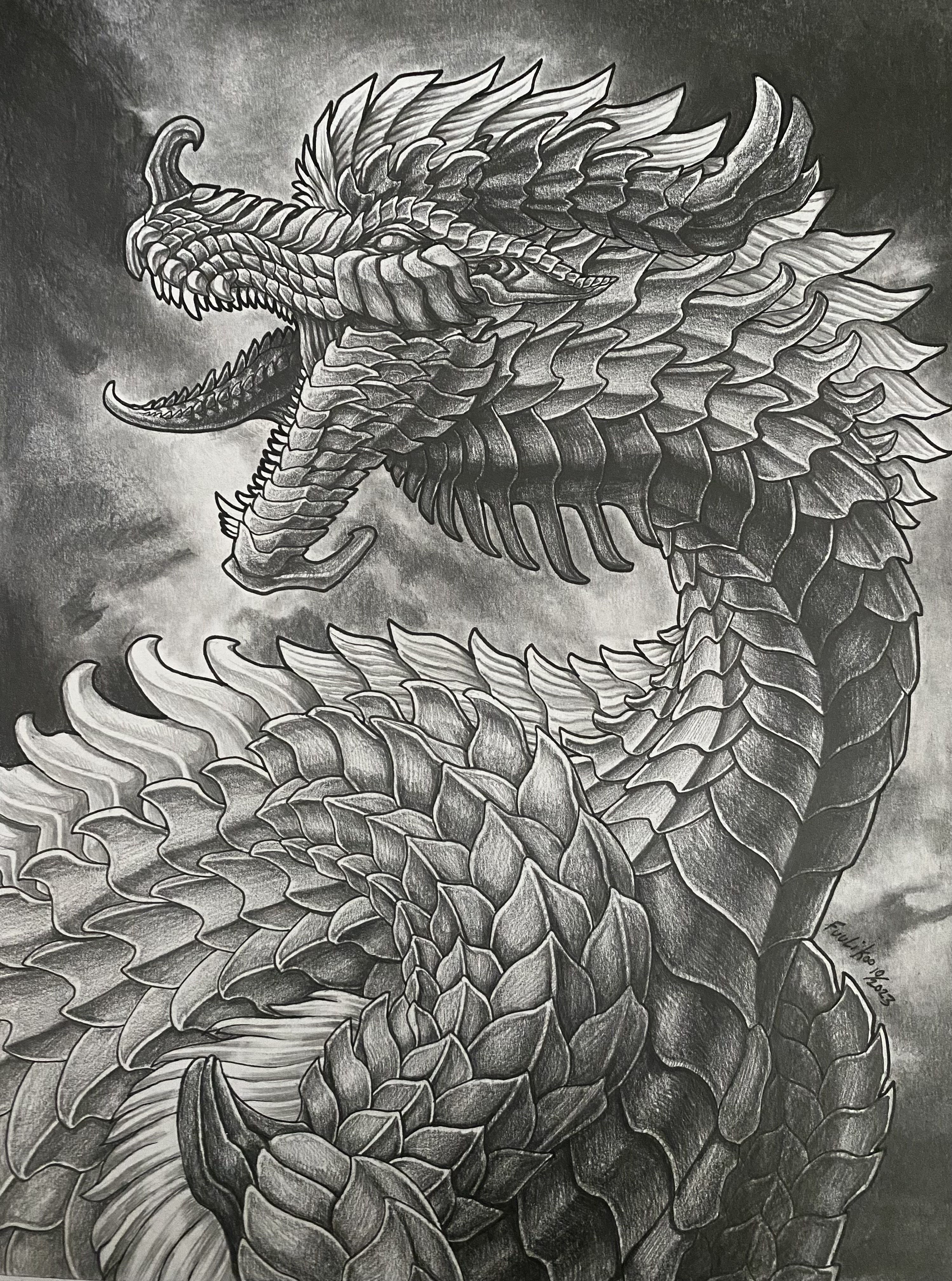
Have you ever tried drawing a dragon but felt your lines were too stiff and unrealistic? It can be frustrating when you want to capture the majestic essence of a dragon, but your drawing falls short. This is where understanding "Dragon Drawing Real" becomes crucial. Whether you're an artist looking to improve your dragon illustrations or simply someone fascinated by these mythical creatures, mastering the art of drawing a dragon that looks real can elevate your artwork significantly.
Understanding the Anatomy of a Dragon
Before you can draw a dragon that feels real, it's essential to understand the anatomy of these mythical beasts. Dragons typically have elongated bodies, wings, and tails, along with a variety of features such as horns, scales, and sometimes even wings. In my experience, breaking down these elements into simpler shapes can make the process much easier. For instance, the body can be thought of as a combination of oval and rectangular shapes, while the wings are a series of overlapping triangles.
Techniques for Achieving Realism
To draw a dragon that looks real, focus on several key techniques:
- Shading and Texture: Use shading to create depth and texture. Pay attention to how light interacts with the dragon's surface, whether it’s smooth scales or rough skin. This will help your dragon look more lifelike.
- Proportions: Ensure that the proportions of your dragon are correct. A dragon’s head should be in proportion to its body, and its limbs should be balanced for a realistic appearance.
- Detailing: Add intricate details like scales, fur, and other textures. This can make your dragon more engaging and believable. For example, use cross-hatching to create the texture of scales.
In my experience, practicing these techniques consistently will help you develop a better sense of how to draw dragons that feel real. It’s also helpful to study real animals and their anatomy to get a better understanding of how different parts of a creature should look.
Practice Makes Perfect
The key to drawing a dragon that looks real is practice. Spend time studying reference images, both from traditional sources and modern media. Try to break down the dragon into simpler shapes and then build up the complexity gradually. Each time you draw, focus on one aspect of the dragon, such as its wings or tail, and pay close attention to the details.
One specific tool I’ve found useful is the Wacom tablet, which allows for precise control over your drawings. When I tested this, I noticed a significant improvement in my ability to create detailed and realistic dragon drawings. However, there are many other tools available, so experiment to find what works best for you.
Final Tips for Success
When drawing a dragon, remember that it’s okay to make mistakes. Don’t be afraid to erase and start over if something isn’t quite right. Patience and persistence are key. As you continue to practice, you’ll develop a better eye for what makes a dragon look real and how to convey that in your drawings.
That said, keep in mind that realism can be subjective. What one person finds convincing might not work for another. The goal is to create a dragon that resonates with you and your audience. By focusing on the techniques outlined here and continually refining your skills, you can achieve a level of realism that brings your dragon drawings to life.
Now, go forth and draw those majestic dragons that feel truly real!
Related Terms:
- dragon picture real life
- dragon drawing images
- dragon drawing for kids
- dragon drawing pinterest
- dragon drawing tutorial
- simple dragon drawing


